TL;DR
- This blog is useful for students, fresh graduates, job seekers, and professionals who want to improve their resumes by properly showcasing languages known in CV.
- Listing languages known in CV can strengthen your resume by highlighting multilingual abilities, cultural awareness, and strong communication skills valued by employers.
- Language skills should be included based on proficiency level and relevance to the job, and can be placed in sections like the language sidebar, work experience, or education.
- Businesses value languages such as Spanish, German, Arabic, French, English, and Hindi, as they support global communication and international business operations.
- Clearly presenting languages known in CV with proper proficiency levels and real-world examples can lead to better job opportunities, higher salary potential, and international career growth.
Your language skills can take your resume to the next level. Clearly presenting the languages you know in your CV can play a major role in ensuring you attract the attention of a recruiter. When listed and formatted correctly, multilingual skills demonstrate your ability to interact with different cultures and collaborate with international teams in global business environments.
You might be wondering how to list these skills on your resume, especially since more than half of the world population speaks more than one language. Your multilingual ability could be the missing factor that helps you stand out to your next employer. Listing languages known in CV helps hiring managers quickly understand your communication strengths and world view.
We Will Explore
- 60 Soft Skills for Resumes: Why They Matter
- Resume Format for Freshers: Best, Simple Examples for Jobs
- Tips to Make Your Resume Stand Out
Should You List Languages on Your Resume?
Whether you should include languages known in CV mainly depends on two factors:
- Your proficiency level
- The relevance of the language to the job
If the job involves a particular language, make it clearly visible in your resume. Even when not mandatory, including languages known in CV can still strengthen your profile and show strong communication capability.
If you have intermediate to native-level proficiency, add it. Adjust how prominently you present language skills based on the role you are applying for.
How to List Languages on Your Resume
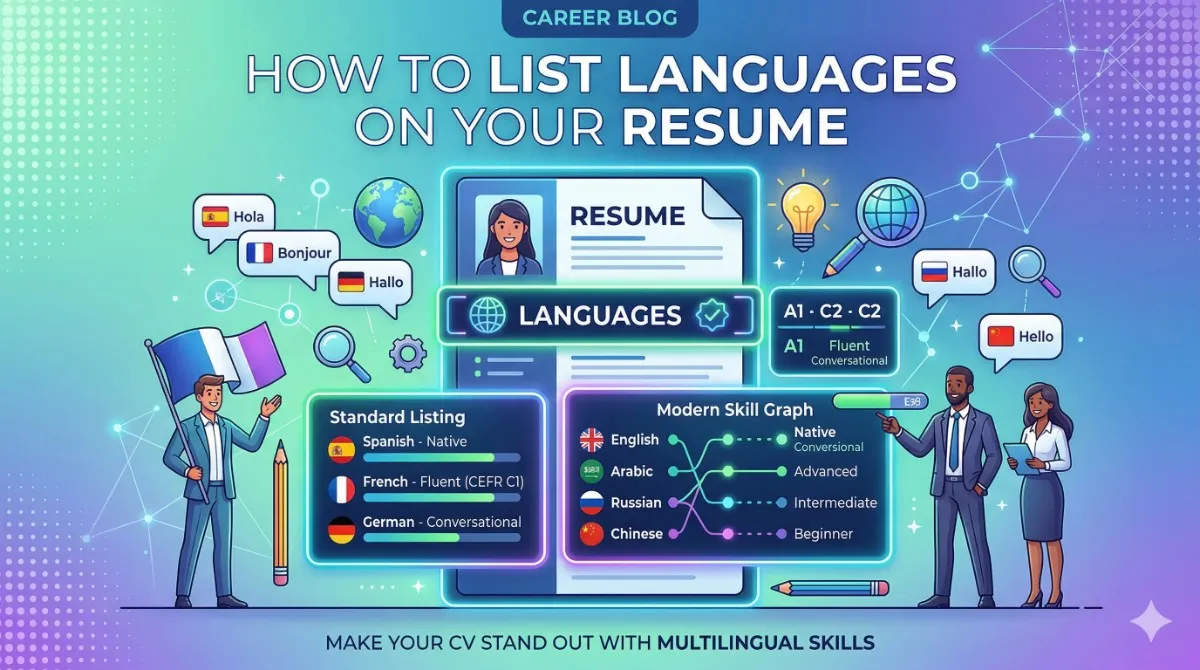
You can display languages known in CV in multiple ways depending on your resume format and the importance of language skills for the role.
1. Language Sidebar
A sidebar is an ideal area to mention languages known in CV, especially when the position requires language skills. Sidebars are visually clear and quickly draw recruiter attention.
Many modern templates let you show proficiency with icons, stars, or progress bars. If you speak multiple languages, create a separate language list or include it in your skills section.
2. Within Work Experience
You can also mention languages known in CV inside your work experience. Add examples that show how you used language skills in real business contexts.
If language proficiency is a key part of your role, place it near the top of your responsibilities.
3. Education Section
If your academic background focused on language learning, include it under education. This is especially useful for fresh graduates who want to showcase training and interest areas.
Including this information improves the credibility of your languages known in CV.
What Employers Look for in Language Skills on a CV
Bilingualism is a valuable and relatively rare skill. It can significantly broaden your career opportunities. Adding languages known in CV can make your profile more attractive, especially in industries working with international clients, global markets, or multicultural teams.
Since time is limited, prioritize learning professionally valuable languages. Companies prefer candidates who can support international communication and business expansion.
High-Demand Languages for Business
The following languages are widely considered useful for global business:
- Spanish
- German
- Arabic
Professionals who include these languages in CV may access more international opportunities and role types.
Other Valuable Business Languages
Other widely spoken and employer-valued languages include:
- French
- English
- Hindi
Language learning also reflects cultural awareness, empathy, and adaptability. Mentioning how your language skills helped you collaborate with diverse teams can make your profile stronger.
Examples of Languages Known in CV
Example for Freshers
Languages
English - Fluent
Hindi - Native
German - Basic
Fresh graduates can use languages known in CV to demonstrate adaptability and communication strength, especially with limited work experience.
Example for Experienced Professionals
Languages
English - Fluent
Spanish - Advanced
French - Intermediate
Experienced candidates should highlight languages used with global teams or international clients.
Example for International Jobs
Languages
English - C1
German - B2
French - B1
How Language Skills Improve Your Career Opportunities
Using languages known in CV can positively influence your career growth and future opportunities.
Better Job Opportunities
Multilingual candidates often gain an advantage in roles that involve international teams, cross-border clients, or global customer communication.
Higher Salary Potential
Many companies offer higher compensation to professionals who can support global operations in more than one language.
Conclusion
Language ability is a strong asset in today competitive workforce. Whether you are a student, early-career candidate, or experienced professional, showcasing language proficiency helps recruiters understand your communication and global readiness.
By clearly showing proficiency levels, using professional formatting, and adding context from real work situations, your languages known in CV can become a valuable and credible part of your profile.