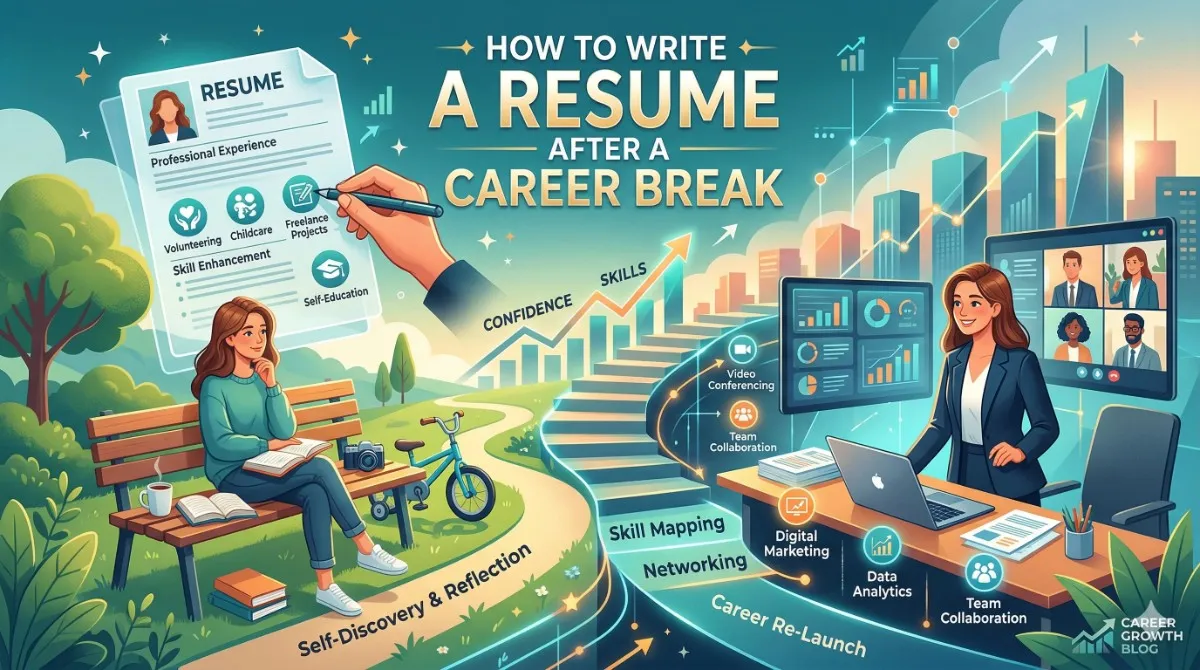
TL;DR
- This blog is for professionals returning to work after parenting, layoffs, health recovery, study, travel, or other breaks.
- A strong career break resume highlights growth, transferable skills, and productive experiences instead of hiding gaps.
- Explain career break in resume briefly, honestly, and positively, then shift focus to readiness and value.
- Use combination or functional resume formats to emphasize strengths over date gaps.
- Treat your break as valid experience by including learning, freelancing, volunteering, and certifications.
A career break is a period when a professional steps away from work for personal or professional reasons. It is now more common than ever in an evolving workplace. People take breaks for parenting, health recovery, higher education, travel, layoffs, or market-related changes.
Returning to work can feel difficult if your experience is not presented clearly. This is where a well-written career break resume helps. The goal is not to hide the gap, but to position it strategically.
Non-linear career paths are increasingly accepted. A properly presented career break in resume can show flexibility, maturity, and self-driven growth. An effective resume after a career break focuses on what you gained during the break, not only the timeline gap.
Also Read
- Online Resume Maker vs Traditional Resume Writing
- What Is an ATS-Friendly Resume?
- Tips to Make Your Resume Stand Out
Why Should You Address Career Breaks in Your Resume?
Time away from formal employment does not mean zero value. Whether you were caregiving, recovering, learning, or building personal projects, you were still developing capabilities.
Recruiters look beyond dates. They look for growth, clarity, and readiness. When you explain your gap clearly in a career break resume, you control your narrative and reduce confusion.
If you are learning how to write a resume after a career break, the key is to present your story with confidence rather than leaving the gap open to interpretation.
Here are four strong reasons to include your break:
- Take control of your resume narrative
- Present your break as a positive experience
- Show your personality beyond job roles
- Demonstrate growth and continuous learning
How Do You Explain a Career Break in Your Resume?
Many professionals wonder how much detail to include. You do not need to share everything. Focus on recent and relevant breaks, because recruiters care most about your current readiness.
A strong explanation in a career break resume should feel natural, concise, and factual.
- Be honest
- Be specific
- Focus on transferable skills
- Include it in your experience section
Where to Put an Employment Gap in Your Resume
When writing a resume after career break, placement matters as much as wording. The best approach is to include the break as part of your experience timeline rather than hiding it.
List it in reverse chronological order so your timeline remains complete and consistent.
How to Structure Your Career Break Entry
- Mention break type, such as Career Break, Sabbatical, or Parental Leave
- Add city if relevant
- Clearly state duration
- Add one concise line about key focus
- Highlight learning, freelancing, volunteering, or certifications
The Best Resume Format for Back-to-Workers
Format choice is important when creating a resume after a career break. The right format highlights strengths and reduces timeline concerns.
1. Combination (Hybrid) Resume
A combination resume balances skills and work history. Start with key strengths and achievements, then list experience in reverse chronological order.
2. Functional Resume
A functional resume emphasizes skills over timeline. It is useful for long breaks or multiple gaps by grouping experience under capabilities such as communication, leadership, project management, or technical skills.
How to Write a Resume After Career Break (Step-by-Step Guide)
Start with a Strong Summary
Open with a concise professional summary covering prior experience, key strengths, and readiness to return. Keep tone confident and forward-looking.
Address the Career Break Clearly
Be brief, transparent, and confident. Avoid unnecessary personal details.
Example: Career Break (2022-2024): Focused on family responsibilities and upskilling through online certifications.
Highlight Transferable Skills
Even during a break, you may build time management, communication, multitasking, problem-solving, and planning skills. Include these with concrete context.
Include Relevant Experience
Do not skip freelance work, internships, volunteering, certifications, or projects completed during the break. These prove continued engagement and readiness.
Update Your Skills Section
Show current tools, technologies, and skills relevant to your target role. An updated skills section makes a resume after a career break more credible and competitive.
Conclusion
A career break is no longer viewed as failure. It is often a normal stage in modern career paths. What matters is how you present that phase in your resume.
When you learn how to write a resume after career break, you can turn that gap into evidence of resilience, learning, and maturity. Be clear, honest, and focused on the value you now bring to employers.
Your career does not need to be perfectly linear to be successful. A strong career break resume helps you move to the next opportunity with confidence.