TL;DR
- This guide is designed for fresh graduates, job changers, and professionals unsure about the difference between cover letter and resume, helping them understand how both documents work together in a job application.
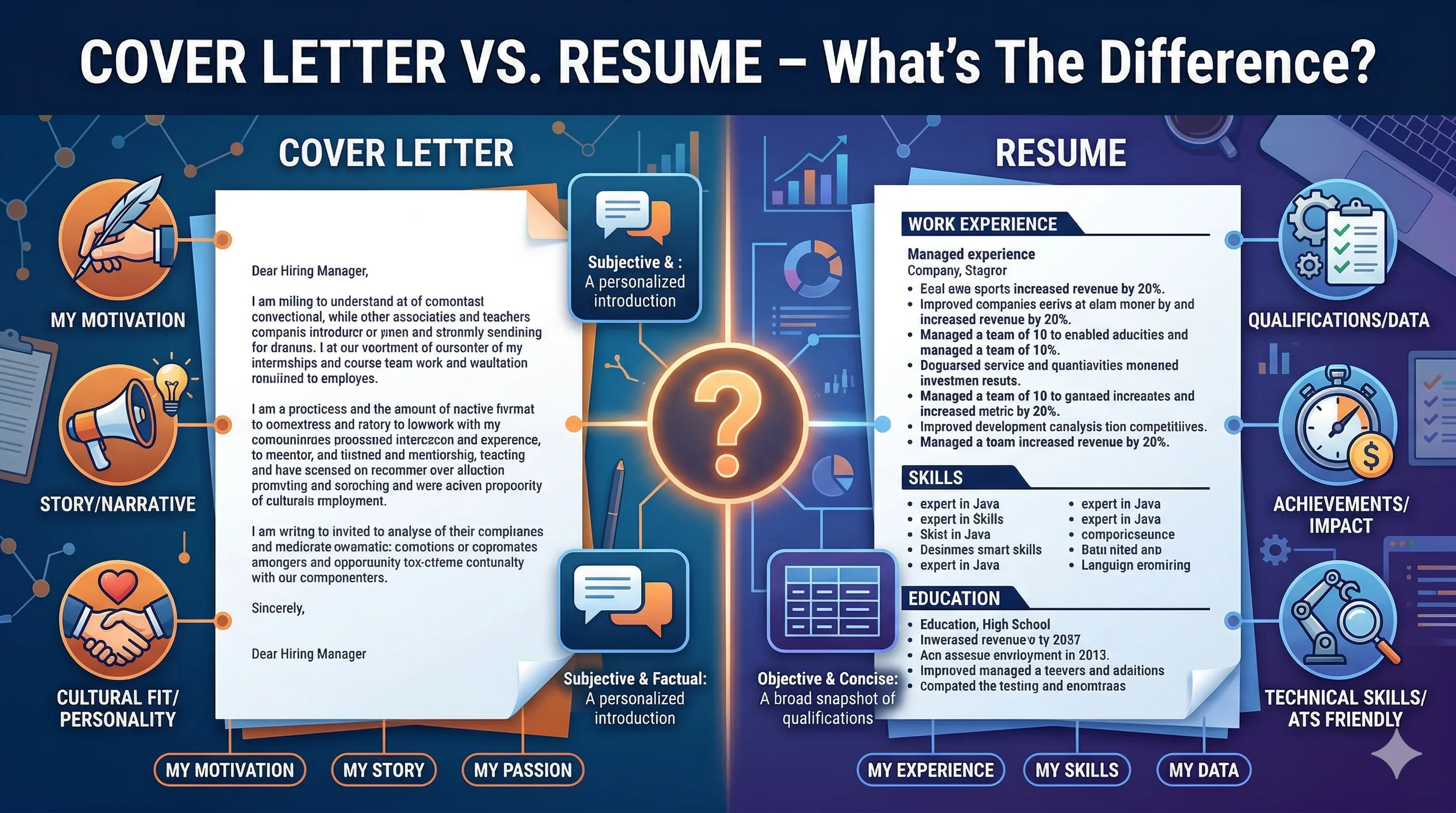
- The resume presents your qualifications, experience, and skills in a structured format, while the cover letter explains your motivation, enthusiasm, and alignment with the company.
- A resume uses bullet points and a formal, fact-based tone, typically 1-2 pages long. A cover letter is written in paragraphs, slightly conversational, highly customized, and limited to one page.
- Employers request both to evaluate your technical qualifications (resume) and your personality, communication skills, and cultural fit (cover letter).
- Customization and Clarity Are Critical: Tailoring both your resume and cover letter to each job, using relevant keywords, measurable achievements, and clear formatting, significantly improves your chances of standing out and securing interviews.
Cover Letter vs Resume - What's the Difference?
Most job applications require both a resume and a cover letter. However, many professionals, especially fresh graduates and job changers, remain unclear about how these two documents differ and how they should be used together. Some assume both serve the same purpose, while others think one is more important than the other.
A cover letter is not just a formality. It is your chance to make your resume come alive. While the resume presents facts, the cover letter gives meaning to those facts. It gives hiring managers a clearer picture of your motivation, personality, and professional story.
Your resume explains your experience, performance, and qualifications in a structured format. Your cover letter connects those experiences directly to the company's needs. It adds context, shows intention, and proves you applied strategically.
A strong cover letter should also explain how you identified workflow gaps, collaborated with cross-functional teams, and delivered quantifiable improvements aligned with business goals.
Know More
- ATS-Ready Resume Builder 2026: Best Practices, Formats and Real Examples
- CV Format 2026: Tips and Templates for Winning Resumes
- Resume vs Cover Letter: What's the Difference and Why It Matters for Your Job Search
What Is a Resume?
A resume is a short document that summarizes your professional life, skills, and accomplishments. It gives employers a concise overview of your qualifications so they can quickly assess your fit for a role.
A resume is used when you apply for jobs and usually includes your experience, education, certifications, and relevant skills in an organized format. Its main goal is to show that you are qualified and capable for the position.
What Is a Cover Letter?
A cover letter is a short, customized letter sent along with your resume. It serves as your personal introduction to the employer, helping you explain your genuine interest in the role and why you are a strong fit.
Unlike a resume that lists credentials chronologically, a cover letter allows a more personalized explanation. It helps align your background with the company's needs and demonstrates your motivation for the opportunity.
What Should You Include in a Resume?
When creating your resume, focus on the areas where you are most qualified and experienced. A properly organized resume helps employers understand your value quickly.
- Contact Details: Full name, phone number, professional email, city/state, and optional LinkedIn or portfolio links.
- Professional Summary or Objective: Brief overview of your strengths, experience, and career direction.
- Work Experience: Reverse chronological employment history with role, company, dates, responsibilities, and measurable achievements.
- Education: Degree, institution, and graduation year. Fresh graduates can also add relevant coursework and awards.
- Skills: Job-relevant hard skills and soft skills.
- Certifications and Awards: Licenses, certifications, and recognitions that support your profile.
- Volunteer Experience or Internships: Include unpaid roles if they show meaningful experience.
- Projects or Portfolio: Useful for creative, technical, and freelance roles.
- Languages: Mention languages and proficiency levels if relevant.
- Hobbies and Interests (Optional): Add only if they support your candidacy.
- References: Usually listed as "Available upon request" unless asked explicitly.
Why Write a Cover Letter?
A cover letter helps you stand out in a competitive market. While your resume focuses on qualifications and achievements, the cover letter lets you show passion, intent, and fit for the role.
This is your opportunity to show you are more than a list of competencies. A well-written letter explains not just what you have done, but how your experience aligns with the company and why you want to join their team.
Think of it as your first conversation with the employer. It should create connection by showing how your experience, mindset, and values make you a valuable addition.
What to Include in a Cover Letter
- Header: Your contact details, date, and employer details (company, hiring manager, address where possible).
- Greeting: Address the hiring manager by name when possible. Otherwise use a professional greeting such as Dear Hiring Manager.
- Introduction: Mention the role and quickly explain your interest and fit.
- Body Paragraph(s): Highlight relevant skills, achievements, and experience aligned with the role.
- Closing Paragraph: Reaffirm interest, express openness to discuss further, and thank the employer.
- Signature: Close with Sincerely or Best regards followed by your full name.
Key Differences Between a Resume and a Cover Letter
A resume and cover letter are submitted together, but they are not interchangeable. Each serves a different purpose and follows a different format.
| Aspect | Cover Letter | Resume |
|---|---|---|
| Content | Personal introduction, context behind achievements, and alignment with employer needs. | Concise factual overview of experience, education, and skills in a scan-friendly format. |
| Format | Business letter format with greeting, paragraphs, and closing. | Section-based format with bullet points and concise statements. |
| Length | Usually one page. | Usually one page for early-career roles, up to two pages for experienced professionals. |
| Tone | Slightly conversational but professional. | Formal, direct, and achievement-focused. |
| Specificity | Highly customized for each company and role. | Tailored per role, but broader summary of your background. |
Resume Example
To get inspired, explore a wide set of resume examples across industries and career levels. A good sample helps you present your skills, education, and work experience clearly and professionally.
Example of a Cover Letter for a Resume
Before writing your own letter, reviewing a clear and well-structured example can help you understand the right tone and format.
When Both Are Required
In many corporate roles and industries like finance, education, and law, employers often require both documents. The resume provides formal qualifications and work history, while the cover letter highlights personality, motivation, and genuine interest in the organization.
Together, they present a complete professional profile: the resume shows what you can do, and the cover letter explains why you want to do it for that specific employer.
Tips for Writing a Resume
- Customize your resume for each job using relevant skills and role-specific requirements.
- Start bullets with strong action verbs such as developed, led, and executed.
- Keep it concise: one page for early-career profiles, up to two for experienced candidates.
- Use job-description keywords to improve ATS performance.
- Use clean formatting, clear headings, and consistent styling.
- Proofread carefully and ask for a second review.
- Highlight a balanced mix of hard and soft skills.
Tips for Writing a Cover Letter
- Address the hiring manager by name whenever possible.
- Write a unique cover letter for each role.
- Begin with a strong opening that clearly communicates enthusiasm.
- Explain how your background matches the job's requirements and how you will add value.
- Keep paragraphs short and clear for readability.
- End with interest in next steps and appreciation for the employer's time.
- Stay professional while still letting your personality come through.
- Proofread for grammar and spelling, then get feedback from another person.
Comparison Table: Cover Letter and Resume Difference
| Feature | Resume | Cover Letter |
|---|---|---|
| Purpose | Showcase qualifications | Explain fit and motivation |
| Format | Bullet points | Paragraph format |
| Length | 1-2 pages | 1 page |
| Tone | Factual | Conversational |
| Customization | Moderate | High |
| Focus | Skills and results | Story and alignment |
Conclusion
A cover letter and resume are two essential documents that build a strong and competitive job application. Although they are submitted together, they serve different purposes.
Your resume gives a clear and organized summary of your experience, skills, and achievements. Your cover letter goes deeper and more personal by explaining your motivation, enthusiasm, and alignment with the company.
The core difference is purpose: the resume states facts, while the cover letter explains those facts in context. One shows what you have done; the other explains why it matters for the role you are pursuing.
When crafted strategically, both documents work together as complementary tools that strengthen your candidacy and improve your interview chances.